




Five practical lessons from DFA’s Crop Manager peer group in the Czech Republic
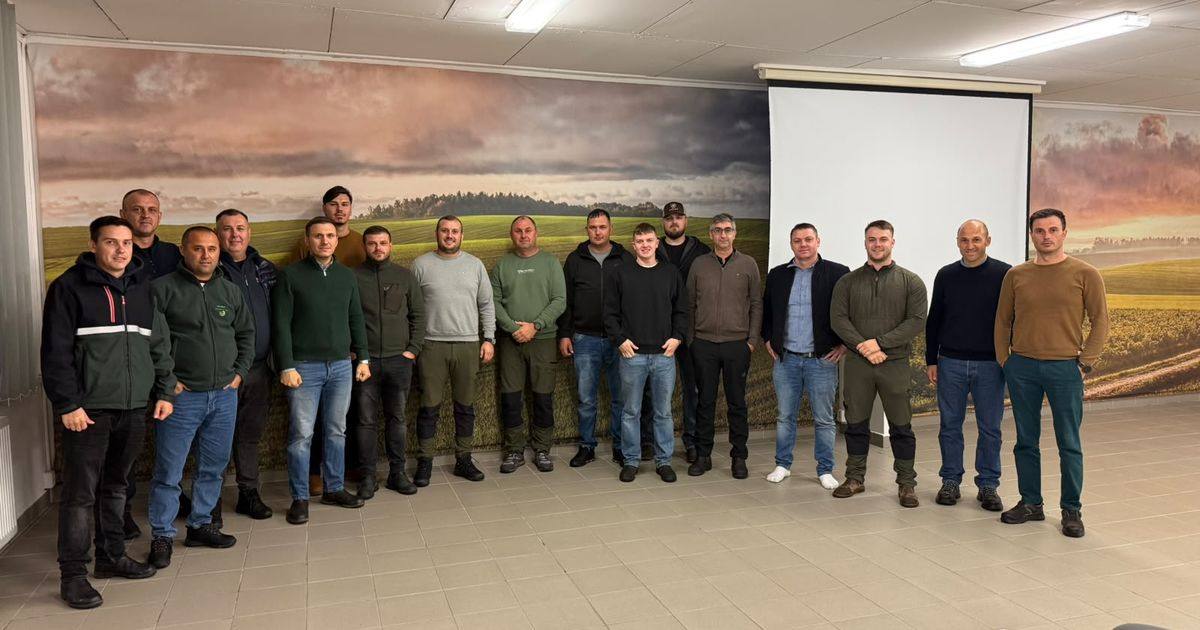
20 participants from DFA’s Crop Manager Group 22 met in November to compare production methods and management decisions. The programme included visits to HORSCH AgroVation and DZV Nova/Agrofert, as well as in-depth discussions among the participants.
Here are five observations worth taking home.
1. More precise fertilisation – not necessarily more fertiliser
Dan-Slovakia Agrar explained how the company combines soil mapping, satellite data, plant analyses, variable-rate application and yield data.
The principle is to distribute nutrients according to field variation and crop development.
The result: Roughly unchanged total fertiliser use, but a higher average yield.
2. Hours per hectare can reveal hidden costs
At HORSCH AgroVation, staff hours per hectare were discussed as a measure of labour efficiency.
A relevant question for your own business: How do hours vary between crops, machinery operations and farms – and why?
3. Fewer crops can mean simpler operations
HORSCH AgroVation is working to simplify production and reduce the number of crops.
Fewer production lines can reduce complexity in planning, staffing and machinery use. But where is the line between efficiency and losing risk diversification?
4. Do you really need to keep every hectare?
At DZV Nova/Agrofert, management is considering reducing the cultivated area due to insufficient profitability.
An important perspective: A bigger farm is not necessarily a more profitable farm.
5. Biogas can also provide bedding
DZV Nova’s biogas plant uses cattle slurry and maize silage. After digestion, the residue is processed and dried so that the solid material can be reused as bedding for the cows.
An example of how residual streams can take on a new role in the wider operation.
What can you use this for?
Three questions for your next operations meeting:
- Do we know which fields give the best return on our fertiliser investment?
- Do we compare labour hours per hectare across farms and crops?
- Do we have land or production lines that tie up resources without contributing enough to earnings?
These insights come from the group’s discussions and visits in November 2026, facilitated by Arnaud Charmetant.
Would you like to exchange experience with other agricultural leaders? Read about DFA’s peer groups and the options that match your responsibilities.
More from DFA – in smaller bites
Follow us on LinkedIn and Facebook for practical insights from international agriculture.
Get DFA Intelligence straight to your inbox: Sign up for the newsletter.